The Problem of Hate speech
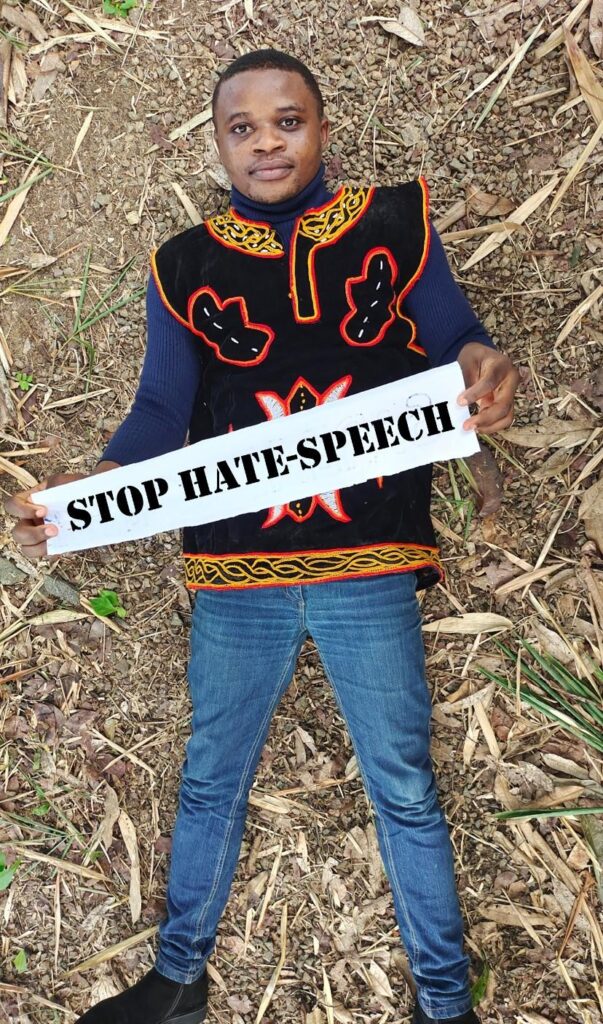
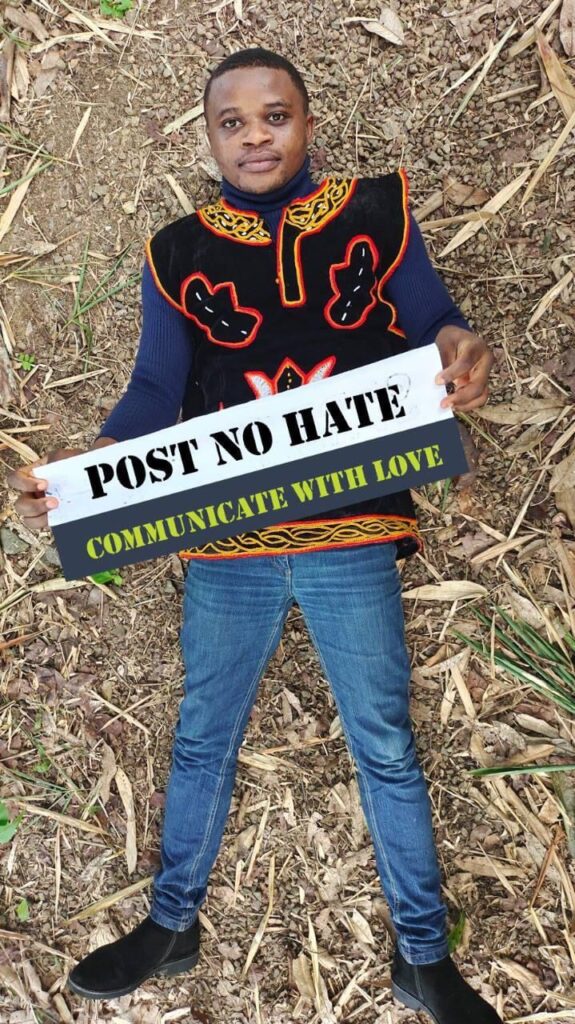
According to the European Commission against Racism and Intolerance {ECRI} Hate speech covers many forms of expressions which advocate, incite, promote or justify hatred, violence and discrimination against a person or group of persons for a variety of reasons. It poses grave dangers for the cohesion of a democratic society, the protection of human rights and the rule of law. If left unaddressed, it can lead to acts of violence and conflict on a wider scale. In this sense hate speech is an extreme form of intolerance which contributes to hate crime.
Some root causes of hate speech in Cameroon include intolerance between political actors, differences in religious ideologies and rivalry ethnic/cultural values. Hate speech appears on digital space in the forms of propaganda, fake news, disinformation, misinformation, threats, impersonation, abuses, incitement to violence, pictures, videos and audios that foster a climate of prejudice and intolerance. These kinds of communications fuel discrimination, hostility and violent attacks.
Peace Education and Civic Rights Club activities in GTTTC Mbengwi
Training of Peace Weavers
We are thrilled to announce that we have reached the halfway mark in our intensive Peace Weavers Fellowship. True to our curriculum’s mission of empowering “high-agency” leaders, Phase I has successfully transitioned our participants from understanding the theory of peace to mastering the technical tools of Conflict Analysis and Non-Violent Transformation. By moving away from traditional lecturing and embracing the Common Ground Approach, our training room has become a living laboratory. Through interactive games and scenario-based simulations, our Peace Weavers are learning that peace is not just a dream—it is a practical skill that requires agility, intelligence, and a commitment to shared humanity.
This phase has been deeply rooted in our unique pedagogical animal symbolism. Our fellows are currently channeling the Agility of the Rabbit to navigate complex social tensions and the Intelligence of the Dolphin to communicate non-violently in the heat of disagreement. We have successfully completed the modules on Identity and Perception, where participants explored how the Anglophone crisis has shaped their worldviews. By unpacking these personal narratives, they are building the “mental infrastructure” needed to repair social links. The energy at the Xhuma Africa Training Center is a testament to our belief that when young people are given the right tools, they stop being the victims of conflict and start becoming the architects of recovery.
As we move into Phase II, our focus shifts toward the Environmental and Civic Resilience pillars of our curriculum. Our Peace Weavers will soon begin their hands-on work in Agro ecology and Climate Rescue, learning how to protect “Mother Nature” as a strategy for preventing resource-based conflicts. We remain deeply grateful to our partners—Global Youth Mobilization, African Girls for Development, and our international supporters—who believe in this African-centered model of leadership. The journey is midway gone, but the transformation is just beginning. We are not just training students; we are graduating “Merchants of Light” ready to illuminate the path to a connected Africa.
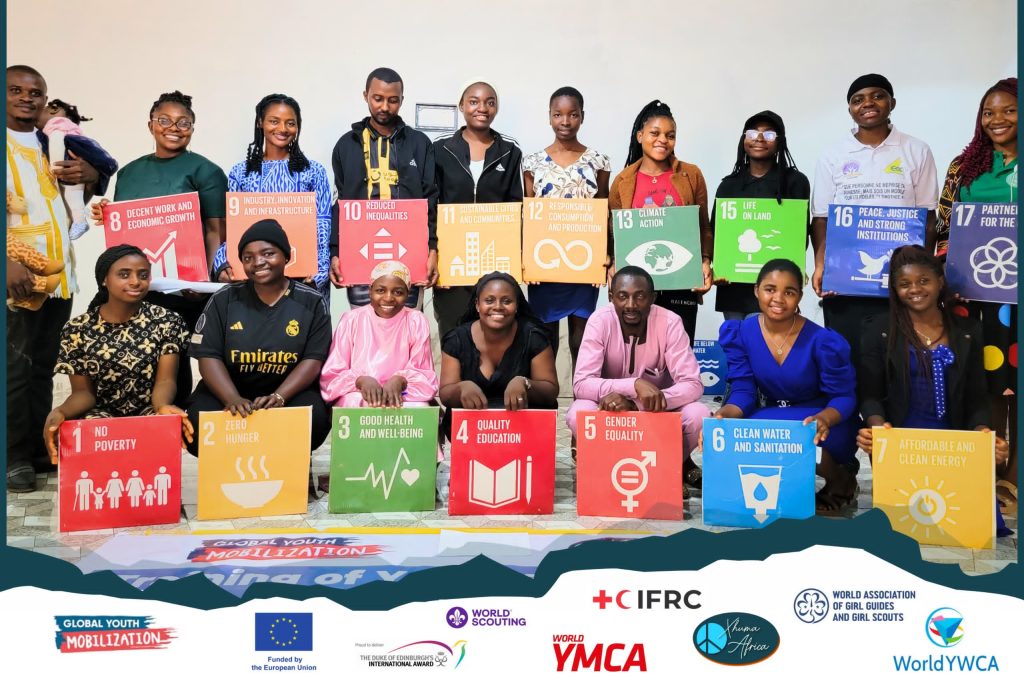
Family Picture of peace weavers
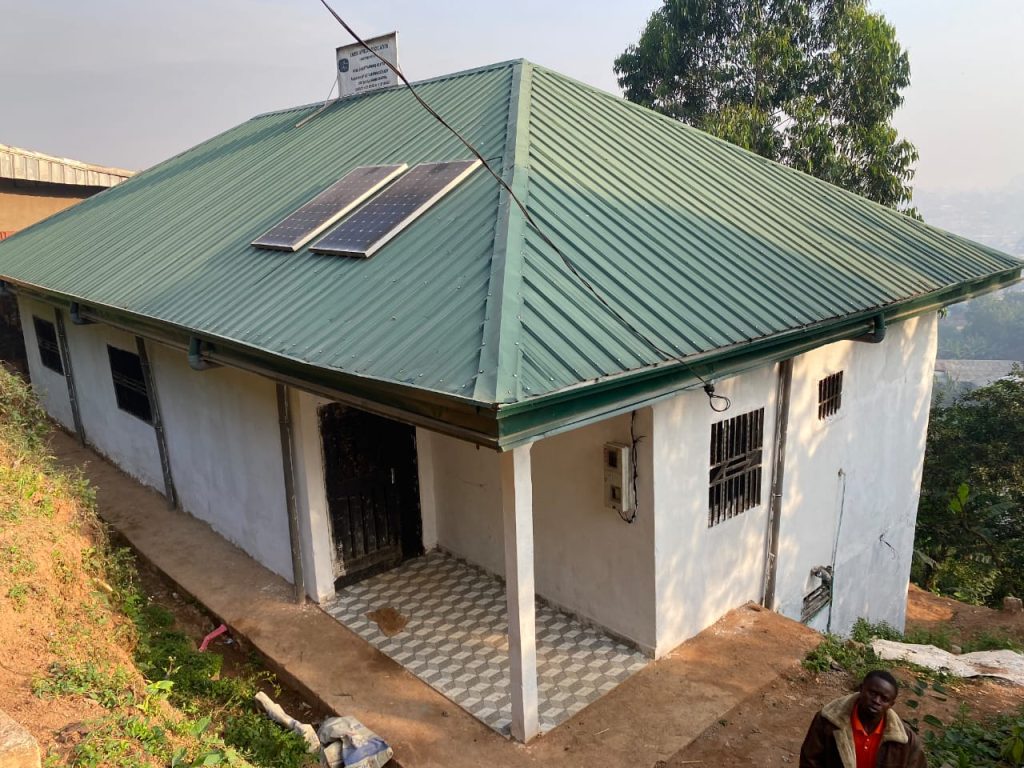
The journey to establish a permanent home for peace in Bamenda began in early 2024. What started as a bold dream has now evolved into a physical testament of resilience, transitioning from site clearing to a physical infrastructure. We are proud to announce that as we enter 2026, we are rounding up the construction of the Xhuma Africa Office Training Center. This structure features a spacious auditorium, three restrooms, a dedicated library hall, four specialized offices, and a recording studio. Having successfully moved from foundation to roofing, the building now stands as a functional hub for our “Peace Weavers” and future resident students. We extend our gratitude to the Kanthari Foundation Switzerland for their primary funding. We also thank our technical team and the Nkwen community for their support in carving out this sanctuary from the valley soil. Our focus for 2026 is the final lap: furnishing the interior and preparing the campus for official accreditation and its first student batch.
Advocacy in Action: Strengthening the Fight Against Gun Violence
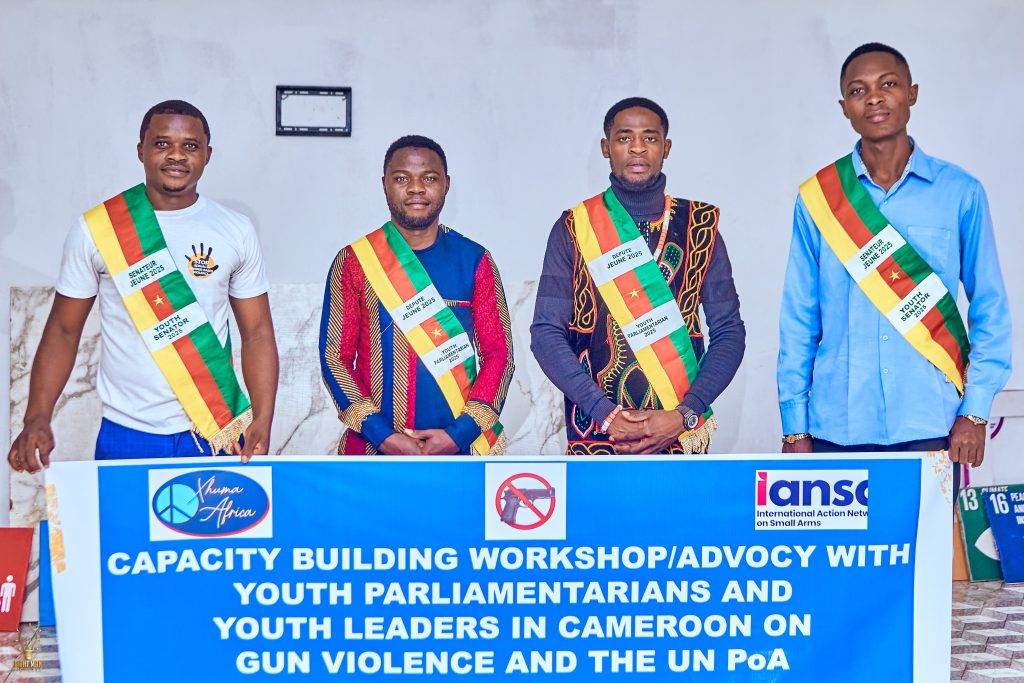
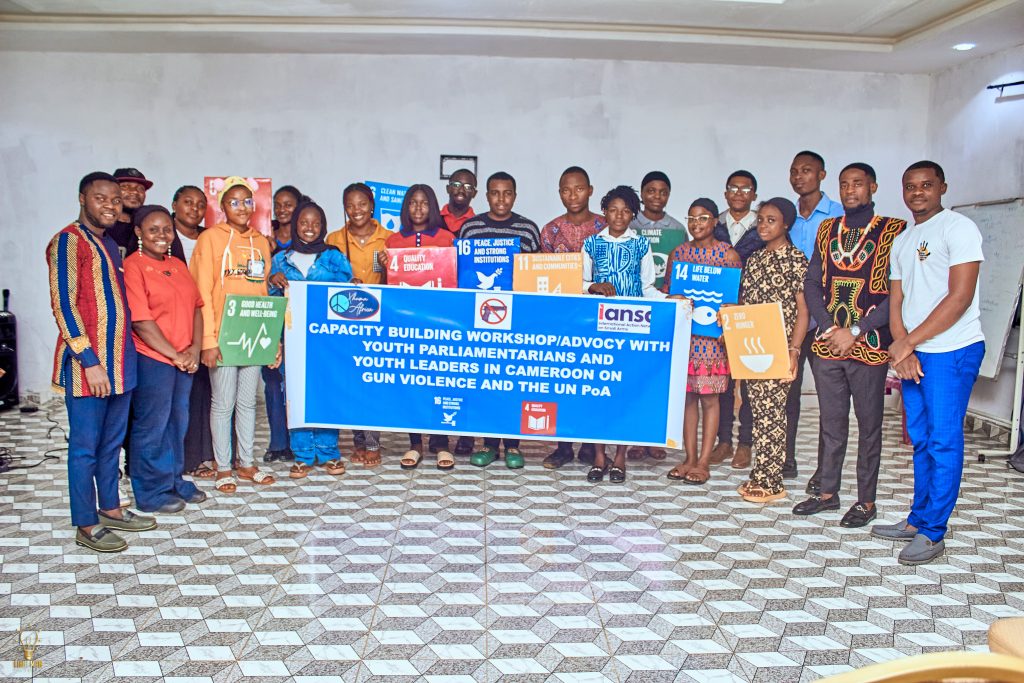
We hosted an advocacy workshop in collaboration with IANSA to address illicit weapon proliferation. The session empowered youth parliamentarians and community leaders to analyze international disarmament policies and bridge the gap between global treaties and local security realities. A key outcome was the signing of a collective petition urging decision-makers to enforce firearm regulations and integrate youth perspectives into safety plans.